


Oahu Snorkeling & Diving
Oahu offers world-class snorkeling and scuba diving, ranging from protected marine sanctuaries teeming with green sea turtles to deep shipwrecks and dramatic underwater lava tubes. Ocean conditions change drastically by season; the North Shore offers spectacular, calm summer diving but becomes highly dangerous with massive swells during the winter. Be aware of the surf forecast, water clarity and weather when deciding to go out, and never dive alone! People drown every year that have been diving their whole lives.
Diving is one of my favorite activities to do on Oahu, especially during the calm summer months on the North Shore. Freediving is a wonderful way to explore the water, untethered, but Scuba diving is an incredible way to slow down and really enjoy the underwater world in all its glory. Whether you are a novice snorkeler or an advanced free diver, there are so many magical spots on the island that are sure to blow you away.
Accessories & Gear
Here is a list of some of my favorite online diving purchases, things I dive with all the time:
Recommended local places to get diving gear are:
Dive Company Recommends
Recommended companies to scuba dive with are:
A very helpful website I found is Oahu Dive Guide by Steven Apsley. He provides great information and detail on most of the dive sites on Oahu.
The following are some of my personal favorites:

North Shore
The North Shore has some incredible dive sites that are easily accessible via the shore. There are lots of lava formations underwater, as well as some easy to difficult swim through caves. Most North Shore dive sites are only open from May to September (due to large surf conditions). Dangerous surf conditions and rip currents are present during the winter and early spring, so always use caution and check the forecast.

From West to East:
-
Mokule'ia Beach
-
Haleiwa Trench
-
Alligator Rock | Leftovers
-
Laniakea Beach
-
Waimea Bay
-
Three Tables
-
Fire House
-
Sharks Cove


mokule'ia
Mokulēʻia (pronounced moh-koo-LAY-ee-ah) literally translates to "isle of abundance" or "district of abundance".
The name is derived from two Hawaiian words:
-
Moku: meaning "island" or "district".
-
Lēʻia: referring to abundance or a gathering of things.
Mokuleia, located on Oahu's North Shore, is a fantastic destination for pelagic diving (shark snorkeling) and shallow shore snorkeling. Because it is a largely undeveloped, open coastline, ocean conditions can change rapidly, making summer months the best and safest time to visit. There is a long stretch of white sand with a shallow barrier reef. When the summer waters are calm, the inner reefs provide a quiet haven for swimming and spotting Hawaiian Green Sea Turtles.
-
Primary Activity: Shore Snorkeling | Diving
-
Best Season: Summer (May-September)
-
Target Level: Intermediate
-
Notable Marine Life: Hawaiian Green Sea Turtles, Monk Seals
-
Dive Type: Shore Dive
-
Dive Difficulty: Beginner
-
Snorkeling: Beginner
-
Average Depth: 15 - 25 Feet
-
Coordinates: 21.583163, -158.194393
-
Parking: Easy

Hale'iwa Trench
Hale'iwa (Pronounced hah-lay-EE-wah) translates to "house of the frigate bird" (or "home of the bird") in Hawaiian. The name comes from combining two Hawaiian words.
Haleʻiwa Trench is a unique, man-made underwater trench located right in Haleʻiwa town on Oahu's North Shore. Originally blasted out by the military during World War II to hide submarines, it is now a popular intermediate-to-advanced shore dive known for its steep drop-offs and distinct ecosystem. The lack of sunlight down in the trench has turned it into a fascinating natural evolutionary laboratory. Marine biologists have noted that species here exhibit unusual color variations compared to their shallow-water counterparts
-
Primary Activity: Shore Snorkeling | Diving
-
Best Season: April to September
-
Target Level: Intermediate to Advanced
-
Notable Marine Life: Green sea turtles (honu) being groomed by reef fish, Rare and colorful nudibranchs, frogfish, and manta rays
-
Dive Type: Shore Dive
-
Dive Difficulty: Intermediate / Advanced
-
Snorkeling: Intermediate
-
Average Depth: 70 - 90 Feet
-
Coordinates: 21.596227, -158.112213
-
Parking: Easy, Hale'iwa Boat Harbor


laniakea
Laniākea (pronounced lah-nee-ah-kay-ah) is a Hawaiian word that translates to "immense heaven," "immeasurable heaven," or "wide sky". It is a compound of lani (heaven, sky) and ākea (spacious, wide, immeasurable)
Laniakea, affectionately known as "Turtle Beach", is mostly a shoreline and surfing beach rather than a traditional scuba launch site. To dive and explore the deeper reefs and turtle habitats along the North Shore, it is highly recommended to book a guided tour. Some do snorkel close to shore in the little cove toward the right side of the beach. Always maintain at least 10 feet from the turtles and give them space in the water if they do happen to come near you. The waves can be more rough here than down the road (Sharks Cove).
-
Primary Activity: Shore Snorkeling
-
Best Season: Summer (May-September)
-
Target Level: Beginner to Intermediate
-
Notable Marine Life: Hawaiian Green Sea Turtles, Fish

alligator rock
-leftovers-
Alligator Rock on Oahu’s North Shore doesn’t hold deep mythological symbolism in ancient Hawaiian culture; rather, it is a descriptive landmark. Named by surfers and beachgoers, it is a massive limestone rock formation that physically resembles the head and snout of an alligator lying in the water. The formation is located in the beachfront area of Kaʻalaea (meaning “ocherous earth” in Hawaiian).
Leftovers / Alligator rock is a well-known surf spot, but also a great dive that envies Sharks Cove and the Cathedral. Long trenches formed from lava flow run perpendicular to the shore line, with a significant number of unforgettable rock formations and caves to explore. Because this is a less-known dive spot, there is a lot wildlife and coral in the area, including some resident sea turtles that hand out in the caves. The lava flow created some incredible shapes, caves, and swim through passage ways. The trenches all fairly parallel to one another, and perpendicular to the shore line making navigating this area easier.
-
Primary Activity: Shore Snorkeling | Diving
-
Best Season: Summer (May-September)
-
Target Level: Beginner to Intermediate
-
Notable Marine Life: Hawaiian Green Sea Turtles, nudibranches, spotted eagle rays, large puffer fish, large schools of fish, eels, and spiny lobsters (in the caves), monk seals, manta rays
-
Dive Type: Shore/Boat Dive
-
Difficulty: Beginner
-
Snorkeling: Beginner
-
Average Depth: 15 - 35 Feet
-
Coordinates: 21.629856, -158.076171
-
Parking: Very Limited


waimea bay
Waimea (pronounced wy-MEH-uh) is a Hawaiian place name that translates to "reddish water" (from wai meaning water, and mea meaning reddish). This name honors how heavy rains and the Waimea River wash reddish-brown soil and iron oxide into the bay. During the winter months, this zone is called the "Chocolate River".
Waimea Bay on Oahu's North Shore is renowned for its incredible snorkeling and scuba diving, but is strictly a summer activity (late May to early August). When winter north swells hit, the bay transforms into a world-famous surfing destination with dangerous waves, making it unsuitable for diving. On calm days, the bay may be teaming with fish and awesome underwater sights. This is one of the prettiest spots on the island from above and underwater. There are a couple secret caves and tunnels around here as well to try and discover. Parking fills up quickly so arrive early!
Left Side (The Jumping Rock): Enter the water carefully near the large volcanic rock on the left side of the beach and head out along the edge of the reef. This area has depths of 10-20 feet and is home to sea turtles, butterflyfish, and tangs. There are also two lava tunnels underwater at the base of the jump rock. Watch out for jumpers if you attempt to swim through!
Right Side (Drop-off): The right side of the bay drops off into deeper water much faster, making it better for strong swimmers and free-divers. Some people like to swim from the bay to Three Tables, or vice versa.
-
Primary Activity: Snorkeling | Diving
-
Best Season: Summer (May-September)
-
Target Level: Beginner to Intermediate
-
Notable Marine Life: Hawaiian Green Sea Turtles, Fish, Dolphins


three tables
Ka Lua o Māua, translates literally to "the pit of Maua" or "the hole of Maua". It is the traditional Hawaiian name for the popular North Shore beach and snorkeling site on Oʻahu widely known today as "Three Tables"
Three Tables Beach is a premier shore-entry snorkeling and scuba diving destination located within the protected Pūpūkea Marine Life Conservation District on Oahu's North Shore. The site gets its name from three flat, table-like reef formations that sit about 100 yards offshore and break the surface at low tide. It provides a gentler, sandier alternative to neighboring Sharks Cove, making it popular for both beginners and experienced divers looking for vibrant marine ecosystems. Beginners should stay on the inside shallow shelf between the sandy shore and the "tables" where marine life is dense and water is calmer. Confident swimmers can venture around or outside the flat formations when currents are low.
-
Primary Activity: Snorkeling
-
Best Season: Summer (May-September)
-
Target Level: Beginner to Advanced
-
Notable Marine Life: Healthy corals (like Blue Rice and Lobe), abundant tropical fish (Yellowstripe Goatfish, Christmas Wrasse), sea urchins, and a high probability of encountering Green Sea Turtles (Honu)
-
Dive Type: Shore Dive
-
Dive Difficulty: Beginner
-
Snorkeling: Beginner
-
Average Depth: 20 - 50 Feet
-
Coordinates: 21.646320, -158.064627
-
Parking: Moderate (Crowded)


firehouse
|cathedrals|
The popular North Shore Oʻahu scuba diving site known as Firehouse Cathedrals sits in the Pūpūkea area. Its name derives simply from its location right next to the North Shore's local fire station (Sunset Beach Fire Station). The specific Hawaiian name for the exact coastal area encompassing this dive site is Pūpūkea (which translates to "white shell"). The broader region is known as Koʻolauloa
Tucked cleanly between the highly popular Sharks Cove and Three Tables beach entry points, Firehouse (also commonly known as Cathedrals) is a premier, cavern-style shore scuba dive site located on the North Shore of Oahu, Hawaii. The site gets its unique name because the entry area sits directly behind the local Sunset Beach fire department station. Naturally occurring "skylights" in the ceiling structure allow piercing sunbeams to illuminate the caverns, mimicking a stained-glass cathedral atmosphere. This area is also located in the Pūpūkea Marine Life Conservation District, a protected marine area boasting abundant sea life. The area can be accessed via the shore from Three Tables or from swimming around the reef starting at Sharks Cove. Charter
-
Primary Activity: Diving
-
Best Season: Summer (May-September)
-
Target Level: Beginner to Advanced
-
Notable Marine Life: Frequent encounters include sleeping whitetip reef sharks, sea turtles, eagle rays, octopuses, and moray eels
-
Dive Type: Shore Dive
-
Dive Difficulty: Intermediate
-
Snorkeling: Intermediate
-
Average Depth: 20 - 50 Feet
-
Coordinates: 21.648374, -158.063389
-
Parking: Moderate (Crowded)


SHARKS COVE
Shark's Cove is known by the Hawaiian names Pūpūkea and Kapoʻo. Kapoʻo is the traditional name for the entire tidepools and cove or “Sharks Cove” area, including the area makai of the fire station. Kapoʻo means “loud echoing sound, as of a heavy object falling into water, or of waves booming.” During the winter, the high surf pounds the outer rock “walls” and shoreline of the area, creating booms that amaze visitors and can often be heard by residents in the Pūpūkea plateau. Don't let the name deter you from coming. There are a couple theories of how the cove got it's name. One theory states that fishermen claimed that they caught sharks whenever they fished in the cove, another is that the area looks like a shark from above. Although obviously possible, sharks are rarely spotted in this area.
It is located within Pūpūkea Marine Life Conservation District on Oahu’s North Shore, and is universally rated as one of the premier shore-diving and snorkeling locations in the world. Dispite its name, it is not teeming with sharks. You may occasionally spot harmless, white-tipped reef sharks resting outside the cove. This area is one of my favorite dive spots on the North Shore during calm, summer days. With lots of fish, turtles and lava tubes to explore, it's hard to get bored in the cove. It features pristine, shallow lava rock tide pools and open coves bursting with marine life. There are a few ways to access the cove. There are two shore entries, on each side. Summer only (May to September); winter swells make this area completely un-snorkelable.
-
The Shallow Tide Pools (Left Side): A large, sand-bottom area protected by a massive rock barrier. It ranges from ankle-deep to waist-deep, making it great for wading, families with older kids, and beginners.
-
The Main Open Cove (Center): Ranging from 7 to 16 feet deep, this area is fantastic for intermediate snorkelers. It is filled with large schools of reef fish, sea turtles (honu), and eels.
-
The Outer Reef & Caves (Right/Outside Channel): Dropping down from 20 to 45 feet, the area outside the main rock walls is paradise for scuba divers and free divers. It is famous for its intricate underwater lava tubes, caverns, ledges, and swim-throughs. My favorite entry point, the "Blue Room" is also located over here. I would recommend going with a guide or local friend if you want to access this cave entrance.
-
Primary Activity: Snorkeling | Diving
-
Best Season: Summer (May-September)
-
Target Level: Beginner to Advanced
-
Notable Marine Life: Parrotfish (uhu), Butterflyfish, Surgeonfish, Tangs, and the Hawaii state fish, the Humuhumunukunukuāpuaʻa, Hawaiian green sea turtles, moray eels, octopuses, sea urchins, and nudibranchs
-
Dive Type: Shore Dive
-
Dive Difficulty: Beginner
-
Snorkeling: Beginner
-
Average Depth: 20 - 30 Feet
-
Coordinates: 21.651450, -158.062411
-
Parking: Moderate (Crowded)
The south shore of Oahu is famous for its world-class wreck diving and calm, year-round conditions. Departing mostly from the Kewalo Basin Harbor in Honolulu, you can easily access major artificial reefs, WWII relics, and vibrant, turtle-filled coral gardens within minutes of the Waikiki coast. The snorkeling on this side is a little less exciting. Hanauma Bay is one of the more popular tourist destinations to snorkel close to shore.
South Shore

Top Diving & Snorkeling Spots
-
Turtle Canyons: Located just off Waikiki, this area features shallow, sloping reefs known as "cleaning stations" where Hawaiian green sea turtles gather. It is perfect for both beginner divers and snorkelers.
-
Point Panic: A popular shore dive for intermediate to advanced divers. It features a rich underwater ecosystem along an old discharge pipeline covered in coral and home to octopus and moray eels.
-
Wreck Dives (Kewalo Pipe): Advanced divers can explore artificial reefs, sunken shipwrecks, and dramatic drop-offs just off the Honolulu coast.
-
Sans Souci (Kaimana) Beach: The premier, family-friendly snorkeling spot directly on the Waikiki shoreline, offering calm, shallow, and protected waters.
-
Horseshoe Reef
-
China Walls
-
Magic Island
-
Koko Craters
-
Ewa Pinnacles


Sans Souci (Kaimana Beach)
The phrase "Sans Souci" is not Hawaiian. It is a French phrase that translates to "without a care" or "without worries". In Hawaiʻi, the term has a rich history tied to a specific location in Waikīkī:The Beach: "Sans Souci" is the historic name for the sandy stretch of shore officially known as Kaimana Beach, located at the foot of Diamond Head (next to the Waikīkī Natatorium)
This quiet corner of Waikiki offers Kaimana Beach snorkeling that's perfect for beginners. Protected by an offshore reef, it offers calm, shallow waters and gentle slopes, making it a favorite for local families and lap swimmers. Clear waters and gentle reefs wait just offshore. Forget crowded spots. Here, you find calm entry points and vibrant marine life without the hassle. Stay close to shore and keep an eye out for monk seals that frequent the area. Sometimes they have sections of the beach blocked off if they are napping on the sand. Keep a large distance if you see one. This beach is located just past the aquarium, and is easy to find walking the beach path coming from the Duke statue.
-
Primary Activity: Snorkeling
-
Best Season: May to October
-
Target Level: Beginner
-
Best Entry: Walk in carefully from the soft, sandy edge of the beach rather than stepping onto the fragile living coral.
-
Notable Marine Life: Hawaiian Monk Seals, Hawaiian Green Sea Turtles, Yellow Tang (Lau'īpala), Parrotfish (Uhu), Surgeonfish (Manini), Butterflyfish (Kīkākapu)


Sea tiger
Originally a Chinese trading vessel named Yun Fong Seong No. 303, the 168-to-189-foot ship was confiscated by the U.S. Coast Guard in the early 1990s for smuggling 90+ illegal immigrants into Hawaii. Voyager Submarines later purchased the ship for $1, thoroughly cleaned it of environmental hazards, and intentionally sank it in 1999 to serve as an artificial reef.
The Sea Tiger Wreck is Oahu’s deepest recreational shipwreck dive, resting upright at a maximum depth of 120 to 127 feet on the sandy ocean floor. This 189-foot former Chinese trade vessel attracts large sea turtles, eagle rays, and white-tip reef sharks. Located just a short 10-minute boat ride from Kewalo Basin Harbor near Waikiki Beach, it is highly regarded as one of Hawaii's premier artificial reefs for advanced divers.
-
Primary Activity: Diving
-
Best Season: May to October
-
Target Level: Advanced Open Water
-
Best Entry: Boat Dive with local operators, such as Dive Oahu, Rainbow Scuba Hawaii, and Island Divers Hawaii.
-
Notable Marine Life: Giant Hawaiian green sea turtles (honu), whitetip reef sharks resting on or under the decks, spotted eagle rays, massive Java moray eels, and large schools of frogfish, butterflyfish, and jacks.
-
Dive Type: Wreck Dive (Boat/DPV)
-
Dive Difficulty: Intermediate / Advanced
-
Snorkeling: Not Recommended
-
Average Depth: 70 - 115 Feet
-
Coordinates: 21.279700, -157.859867
-
Parking: N/A


Turtle Canyon
Turtle Canyon is a famous offshore reef located 1.5 to 2.5 miles southwest of Waikiki. In Hawaiian, the sea turtle is called Honu. Because sea turtles are highly revered in Hawaiian culture as symbols of good luck, endurance, and longevity, Turtle Canyon is treated as a highly protected and respected marine environment.
It functions as a natural "cleaning station," where Hawaiian green sea turtles (honu) gather to have algae and parasites picked off their shells by resident reef fish. Because it is located in the open ocean, it is only accessible via a short 10-to-15-minute boat ride from nearby harbors like Kewalo Basin or directly off the Waikiki sand.
-
Primary Activity: Snorkeling, Diving
-
Best Season: May to September
-
Target Level: Beginner to Intermediate
-
Best Entry: Catamaran, Charter or Boat Dive with local operators
-
Notable Marine Life: Giant Hawaiian green sea turtles (honu), Hawksbill turtles, Octopus (Heʻe), Whitetip reef sharks, Parrotfish (Uhu), Bluestreak Cleaner Wrasse, Moorish Idols (Kihikihi), Humuhumunukunukuāpuaʻa, Moray Eels, Spinner Dolphins, Spotted Eagle Rays, Humpback Whales
-
Dive Type: Boat / Kayak Dive
-
Difficulty: Easy
-
Snorkeling: Easy
-
Average Depth: 30 - 35 Feet
-
Coordinates: 21.272217, -157.724333
-
Parking: Easy


y0-257
The YO-257 is a 175-foot decommissioned Navy oiler intentionally sunk off the south shore of Waikiki, Oahu, in 1989. Sitting upright in roughly 100 feet of water, it is an advanced wreck dive renowned for abundant marine life, swim-throughs, and its close proximity to the San Pedro wreck.
About a mile off shore with Diamond Head crater in the background rest the wrecks of the YO257 and the San Pedro. This old World War II Navy ship is one of the island’s most popular dive sites. She is resting upright at about 95ft, max depth 115ft. Holes have been cut through-out the ship making the interior cabins easily accessible, spacious swim-throughs for certified divers. The San Pedro, an old Korean fishing vessel, lies about 50 yards from the YO-257.This old Korean fishing vessel lies about 50 yards from the YO257. In the forward hold it’s not unusual to find White Tip Sharks and Hawaiian Sea Turtles on the bow. Keep an eye out for the mini subs that frequently tour the wreck. It makes for a very cool dive.
-
Primary Activity: Diving
-
Best Season: May to September
-
Target Level: Advanced (due to depth and occasional Diamond Head currents)
-
Best Entry: Boat Dive with local operators
-
Notable Marine Life: Hawaiian green sea turtles, white tip reef sharks, spotted eagle rays, and diverse reef fish.
-
Dive Type: Wreck Dive (Boat/DPV access)
-
Difficulty: Advanced
-
Snorkeling: Not Recommended
-
Average Depth: 70 - 100 Feet
-
Coordinates: 21.261067, -157.837583
-
Parking: N/A

corsair wreck
Located further east near Hawaii Kai, this remarkably intact WWII fighter plane rests in 110 feet of water and is an excellent advanced dive.

Magic island
Magic Island (officially named ‘Āina Moana) is a man-made peninsula in Honolulu, located at the eastern end of Ala Moana Beach Park. ‘Āina Moana translates to "land from the sea" in Hawaiian, recognizing that the peninsula was built by dredging sand, rocks, and coral from shallow reefs.
Originally built in 1964 as a resort complex, it now features a popular, shallow, protected swimming lagoon, large seawalls, and expansive grassy picnic areas. The name "Magic Island" originated in the late 1950s when industrialist Henry Kaiser proposed building a network of artificial resort islands and lagoons off the coast of Waikiki. Although the massive resort project never came to fruition, the name stuck with locals. The outer edges of the peninsula offer spots for surfing, bodyboarding, and scuba diving. The rock wall blocking wave makes this a great beach for families as well. It is located right across from the Ala Moana Mall. My friend did an Discover Scuba Diving (introductory) course out here and loved it. Many tour operators set up near Lifeguard Tower 1G, located at the far end of the Magic Island peninsula.
-
Primary Activity: Snorkeling
-
Best Season: May to October
-
Target Level: Beginner
-
Best Entry: Walk in carefully from the soft, sandy edge of the beach rather than stepping onto the fragile living coral.
-
Notable Marine Life: The large seawalls block incoming waves, creating a calm, protected pool. It’s ideal for testing gear and seeing Hawaiian green sea turtles, octopus, triggerfish, and upside-down jellyfish
-
Dive Type: Shore Dive
-
Dive Difficulty: Easy
-
Snorkeling: Easy
-
Average Depth: 20 - 35 Feet
-
Coordinates: 21.281044, -157.847335
-
Parking: Easy

kewalo pipe
Shallower, 40-to-50-foot reef sites ideal for beginners or as a second-tank dive, teeming with octopuses, eels, and endemic Hawaiian reef fish.
Dive Type: Shore / Boat Dive
Dive Difficulty: Beginner
Snorkeling: Not Recommended
Average Depth: 25 - 30 Feet
Coordinates: 21.288154, -157.864297
Parking: Easy (at Point Panic)


horseshoe reef
This artificial reef is named after an underwater steel pipeline an old storm drain which travels from shore to a huge coral bed in 60 feet of water. Horseshoe Reef is a premier boat-accessible scuba diving site located roughly a quarter-mile off the south shore of Oahu, near Honolulu’s Kewalo Basin Harbor. It gets its name from its distinct double crescent-shaped, U-shaped volcanic rock and coral formations. Boasting nearly 100% coral coverage in some areas, it is widely considered one of the most vibrant and highly visited shallow reef systems on the island. This is a shallower, 40-to-50-foot reef sites ideal for beginners or as a second-tank dive, teeming with octopuses, eels, and endemic Hawaiian reef fish.
Dive Type: Shore / Boat Dive
Dive Difficulty: Beginner
Snorkeling: Not Recommended
Average Depth: 50- 60 Feet
Coordinates: 21.287036, -157.863368
Parking: Easy (at Point Panic)

point panic
A popular intermediate shore dive. It features an underwater ledge, a variety of fish, and is best known for encounters with Hawaiian green sea turtles. Always use a proper dive flag here due to high vessel traffic.
Dive Type: Shore Dive
Dive Difficulty: Beginner/Intermediate
Snorkeling: Intermediate
Average Depth: 25 - 30 Feet
Coordinates: 21.287985, -157.862844
Parking: Easy

china walls
A popular intermediate shore dive. It features an underwater ledge, a variety of fish, and is best known for encounters with Hawaiian green sea turtles. Always use a proper dive flag here due to high vessel traffic.
Dive Type: Shore/Boat Dive
Dive Difficulty: Advanced
Snorkeling: Not Recommended
Average Depth: 30 Feet (Max 55 Feet)
Coordinates: 21.261473, -157.711503
Parking: Average

koko craters
Koko Craters is a beginner-friendly scuba dive Site Info in Maunalua Bay, Oahu, located a quick 10 to 15-minute boat ride from the Hawaii Kai marina Review. The site features shallow, sunken volcanic craters (35–40 ft deep) surrounded by coral ledges and a sandy bottom, famous for its resident Hawaiian Green Sea Turtles (Honu) Details and an underwater Buddha statue Post. Because it is exclusively a boat dive, you'll need to book a charter out of the nearby Hawaii Kai marina.
Dive Type: Boat / Kayak Dive
Dive Difficulty: Easy
Snorkeling: Easy
Average Depth: 30 - 35 Feet
Coordinates: 21.268667, -157.720333
Parking: Easy

ewa pinnacles
Ewa Pinnacles is a premier boat-accessible scuba diving site located off the southwestern coast of Oahu, Hawaii, near Ewa Beach and Pearl Harbor. Known as one of the island's only deep, diveable reef systems, it features dramatic volcanic topography and vibrant marine life. Because Ewa Pinnacles requires a long boat ride from main hubs like Honolulu's Kewalo Basin Harbor, dive shops frequently package it as a long-range, two-tank charter. It is most commonly paired with a second dive at the Nashua Navy Tug, a nearby artificial reef sitting at about 60 feet.
Dive Type: Boat / DPV Dive
Difficulty: Intermediate / Advanced
Snorkeling: Not Recommended
Average Depth: 60 - 80 Feet
Coordinates: 21.287667, -158.002500
Parking: N/A
Oahu’s West Side (Leeward Coast) offers some of the calmest, clearest, and most uncrowded diving and snorkeling on the island, sheltered by the Waianae mountain range. Key highlights include:
-
Electric Beach (Kahe Point): A top-tier shore dive and snorkel spot where warm water outflow attracts massive schools of fish, sea turtles, and dolphins.
-
Makaha Caverns: Renowned for underwater lava tubes, archways, and frequent encounters with white-tip reef sharks and turtles.
-
Boat Charters: Operating out of the Wai‘anae Small Boat Harbor, local charters whisk divers away to world-class shipwrecks like the Mahi and LCU.
West Side

Top Snorkeling Spots
-
Ko Olina Lagoons: Perfect for beginners and families, these four man-made, crescent-shaped lagoons feature calm, shallow waters and are frequently visited by sea turtles.
-
Electric Beach (Kahe Point Beach Park): Excellent for both snorkeling and diving. Snorkelers can view the coral reefs around the shoreline, while the power plant's outflow pipe attracts abundant marine life.
-
Mākaha Beach Park: Best for intermediate snorkelers; offers great visibility and the chance to spot dolphins, rays, and sea turtles outside of the surf break.
-
Pokai Bay: Features a wide, sandy beach with a protective breakwater, making it one of the safest and most reliable year-round snorkeling spots on the West side.
Top Scuba Diving Sites
-
The Mahi Shipwreck: An advanced, 186-foot sunken vessel resting in about 85 to 100 feet of water. It is a cleaning station for large eagle rays, barracuda, and reef sharks.
-
Makaha Caverns: Accessible via boat or a longer surface swim, this site is famous for its spacious underwater lava tubes and natural arches.
-
Star Caves (Keau Corners): A unique, intermediate reef dive featuring star-shaped lava formations, dramatic overhangs, and natural arches.
-
Airplane Canyons: A deeper site (around 98 feet) featuring sunken fuselage sections from the Flight 29 Down TV series, providing a resting place for octopuses, eels, and scorpionfish.


electric beach - kahe point-
Turtle Canyon is a famous offshore reef located 1.5 to 2.5 miles southwest of Waikiki. In Hawaiian, the sea turtle is called Honu. Because sea turtles are highly revered in Hawaiian culture as symbols of good luck, endurance, and longevity, Turtle Canyon is treated as a highly protected and respected marine environment.
A favorite for advanced snorkelers. Not far from where you enter the water, clean, warm water from the adjacent power plant pipe attracts massive schools of fish, rays, and dolphins. There is a tiny beach entry just past the outdoor showers. The rocky shoreline has a strong channel current. This is one of my favorite dive spots on the west side. There is always a ton of fish and wildlife in the waters around this zone. You may even find the secret Buddha if you swim in the right spot. This is one of the few spots I happen upon reef sharks quite frequently.
-
Primary Activity: Snorkeling, Diving
-
Best Season: May to September
-
Target Level: Beginner to Intermediate
-
Best Entry: The small beach, about 100 meters from the parking lot
-
Notable Marine Life: Giant Hawaiian green sea turtles (honu), Hawksbill turtles, Octopus (Heʻe), Whitetip reef sharks, Parrotfish (Uhu), Bluestreak Cleaner Wrasse, Moorish Idols (Kihikihi), Humuhumunukunukuāpuaʻa, Moray Eels, Spinner Dolphins, Spotted Eagle Rays, Humpback Whales, *Buddha Statue*
-
Dive Type: Shore Dive
-
Dive Difficulty: Beginner
-
Snorkeling: Beginner
-
Average Depth: 20 - 30 Feet
-
Coordinates: 21.353711, -158.132011
-
Parking: Moderate
makaha caverns
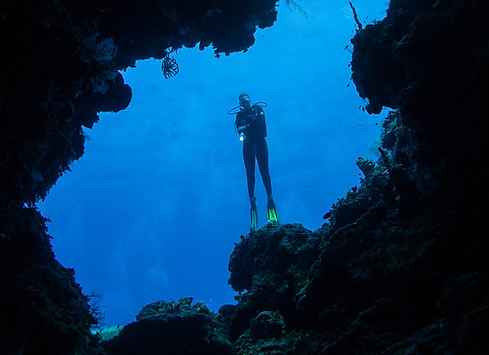
Makaha Caverns is a premier scuba diving and snorkeling site located off the rugged western coast of Oahu, Hawaii. Known for its dramatic volcanic topography, it features a series of underwater lava tubes, arches, overhanging ledges, and clear swim-throughs. The site sits at an intermediate depth range of 25 to 45 feet, making it highly accessible to diverse skill levels and a favorite for spotting green sea turtles. The main caverns feature dual open-ended lava tubes. Holes and cracks in the cave ceilings act as natural skylights. This allows beams of sunlight to pierce through the dark chambers, creating a dramatic, ethereal light show perfect for photography.
Dive Type: Boat Dive (long surface swim)
Dive Difficulty: Beginner
Snorkeling: Intermediate
Average Depth: 20 - 50 Feet
Coordinates: 21.477419, -158.225695
Parking: Difficult

makua beach
Dive Type: Shore Dive
Dive Difficulty: Intermediate
Snorkeling: Intermediate/Advanced
Average Depth: 20 - 45 Feet
Coordinates: 21.353711, -158.132011
Parking: Moderate (Dirt lot)

the mahi shipwreck
Dive Type: Wreck Dive (Boat/DPV access)
Difficulty: Advanced
Snorkeling: Not Recommended
Average Depth: 70 - 100 Feet
Coordinates: 21.413233, -158.195483
Parking: N/A
East side Oahu diving and snorkeling offer incredible marine life like sea turtles and eagle rays, though conditions are highly dependent on the trade winds. Key spots include the renowned Hanauma Bay Nature Preserve and Kailua's offshore islands, which are best accessed via kayak or local tour operators.
East Side

Top Snorkeling Spots
-
Hanauma Bay Nature Preserve (Southeast Oahu): The island's premier snorkeling spot, teeming with reef fish and green sea turtles. It is closed on Mondays and Tuesdays. Entry is $25, and you must book your reservation up to two days in advance starting at 7 a.m. via the Hanauma Bay Reservation System.
-
Lanai Lookout (East Oahu): Experienced snorkelers often use this dramatic rocky access point to explore the outer reefs and sea caves, though it requires a challenging climb.
-
Mokulua Islands (Kailua/Lanikai): Rent a kayak from Twogood Kayaks Hawaii in Kailua to paddle to the "Mokes." The shallow reefs behind the islands offer great marine life and access to Queen's Bath.
Top Scuba Diving Sites
-
East Side Wall & Sea Caves (Portlock to Lanai Lookout): The east-facing wall features spectacular drift dives where you can see large sea caves, sharks, and eagle rays. Because of the trade winds, these are advanced dives. Local operators such as Island Divers Hawaii (based at the Hawaii Kai Shopping Center) run east side drift dives and club boat trips.
-
Waikiki / South Shore (20-30 mins from East Oahu): Because of the windward chop, the best scuba operations run from the South Shore. You can book shallow reef and sea turtle dives at Turtle Canyons through Aaron's Dive Shop located nearby in Kailua.


hanauma bay
In Hawaiian, Hanauma (pronounced “Ha-now-mah) literally translates to "curved bay". It combines two Hawaiian words: hana (meaning "bay") and uma (meaning "curved") which refers to the curves of the indigenous canoes.
Some consider this the crown jewel of beginner snorkeling. This protected volcanic crater mimics a giant outdoor aquarium filled with over 400 species of fish. Reservations are required 2 days in advance, and it is closed Mondays and Tuesdays. I think this bay was better back in it's prime. Today it is heavily trafficked by tourists and the reef isn't quite as magical. You can still find cool stuff further out, but there are better places to snorkel for free.
-
Park Entry Fee - $25.00
-
Parking lot fee - $3.00
-
Locals with State ID - FREE
-
Active Military - FREE
-
12 yrs and under - FREE
-
Tram ride (down) - FREE
-
Tram ride (up) - FREE
-
Primary Activity: Snorkeling
-
Best Season: Year-Round
-
Target Level: Beginner
-
Notable Marine Life: Parrotfish, Humuhumu
